
How to Trade Junior Mining Stocks like Baseball Cards: Turning Rocks and Dodging Ravens
Forget the "Blue Sky" narratives. The real money in junior mining is found on the back of the card.

I recently had the honor of being invited out to Vancouver to speak at the Vancouver Resource Investment Conference (VRIC). It’s always a trip to get out from behind the desk in South Ajax and actually talk to people who aren’t my wife or the guys at the hockey rink about things like NPVs and drill intercepts.
So I literally spent weeks setting up my presentation that was done in the style of RBI Baseball.
The fine people at VRIC set me up with a great hotel room—nice view, solid balcony. But right before I was supposed to head down for my talk, I stepped outside to catch a breath of air.
I opened the door, and three ravens—literally the heralds of Odin himself—decided to use me as a target. They poo’d all over me.
In Japanese culture, the CEO of Japan Gold told me that’s a sign of incredible good luck. My buddy Dan told me the same is true in Jewish culture. Meanwhile, in my culture—South Ajax, Ontario—it’s just humiliating.
Thankfully, I had a spare Lululemon sport coat in the suitcase. I wiped off the “luck,” swapped the jacket, and went downstairs to tell a room full of people that they should start treating their mining portfolios like a box of 1989 Upper Deck.
The Jaded Trap
If you’ve been in this sector as long as I have, you’ve felt it: The Jaded Trap.
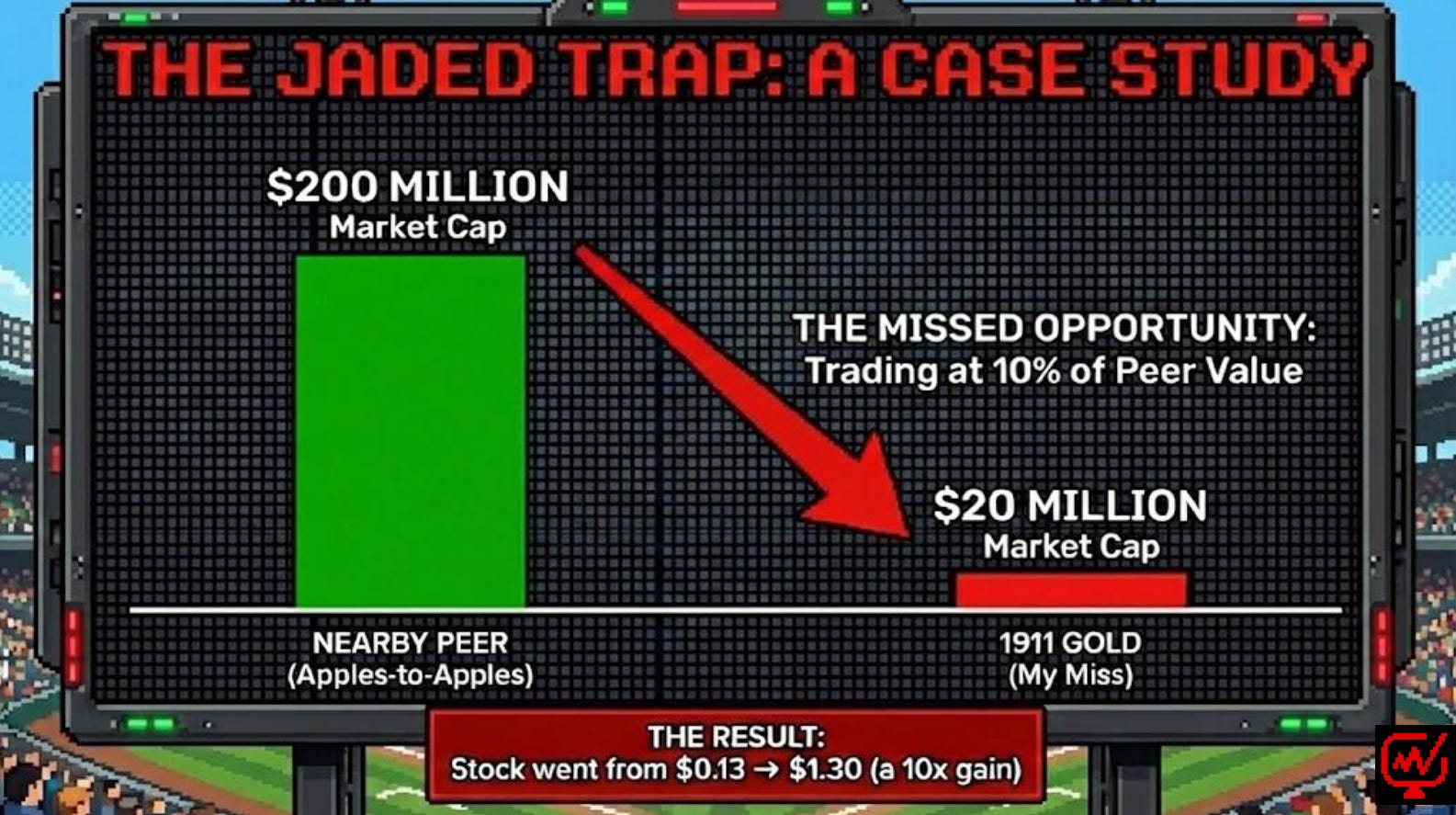
Back in late 2024, I felt like the markets were broken. I looked at companies like 1911 Gold—they had a permitted mill and high-grade ore, yet they were trading at 10% of the valuation of their nearby peers. My math-teacher brain didn’t say “buy,” it said “what’s the catch?” I watched that stock go from $0.13 to $1.30 while I sat on my hands.
I did the same thing with Santa Cruz Silver.
I realized that if I wanted to stop missing these 10x moves, I needed a system to overcome my own cynicism. I needed to move from a guessing game to a systematic exercise in due diligence.
The Stats on the Back of the Card
In mining, CEOs love to talk about “colored maps” and “blue-sky scenarios.” It’s a distraction. When you hold a Ken Griffey Jr. rookie card, you don’t care about the photo on the front; you look at the hits, the home runs, and the on-base percentage on the back.
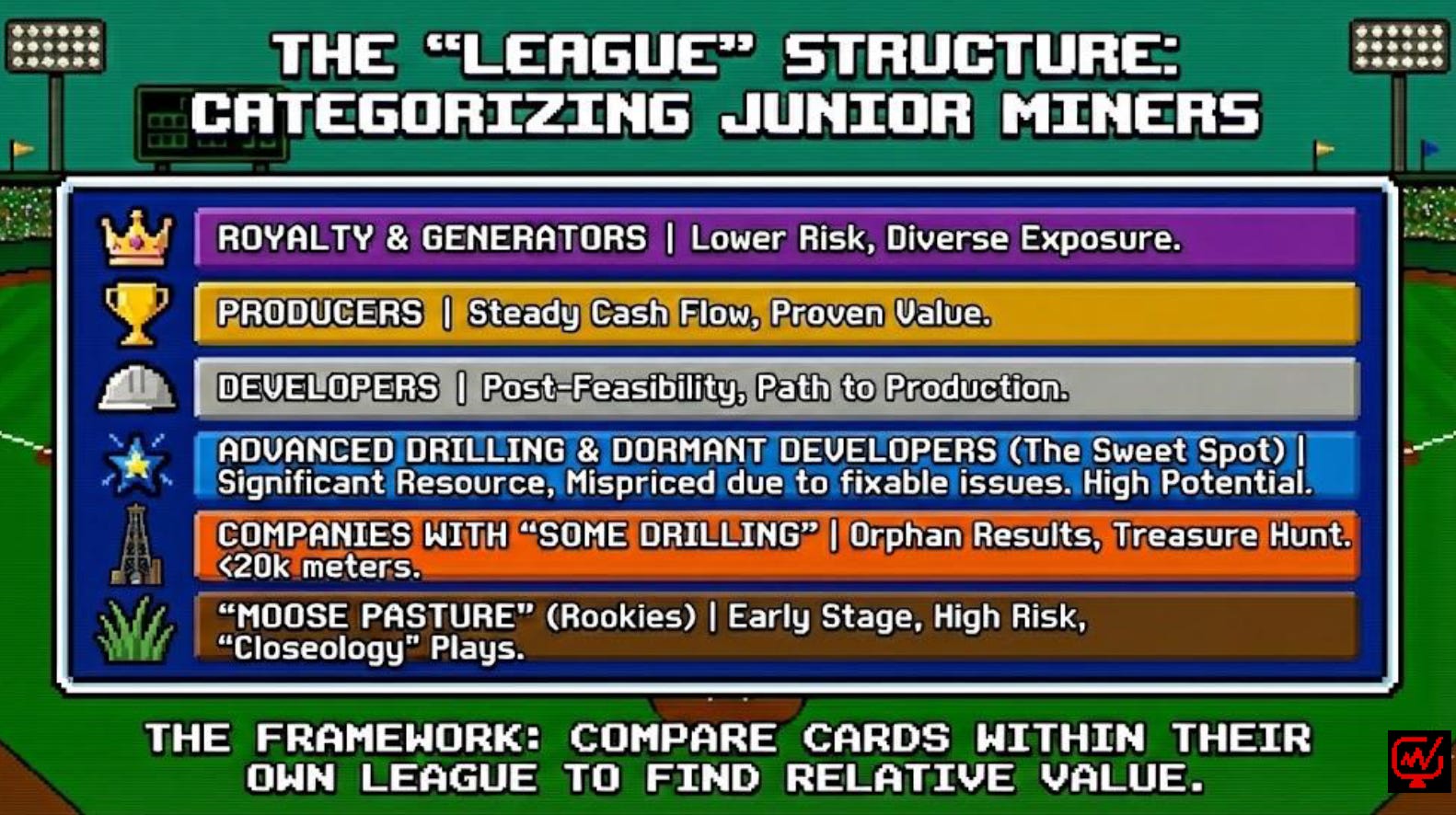
To find the mispriced gems, you have to categorize the deck first. My team and I sat down and looked at over 120 mining companies to break them into six distinct buckets:
The “Cheat Code” for Producers
One thing I learned from Rudy Franc (Seabridge Gold) is that you shouldn’t just look at how much gold a producer finds. You have to ask: Are they a good custodian of capital?
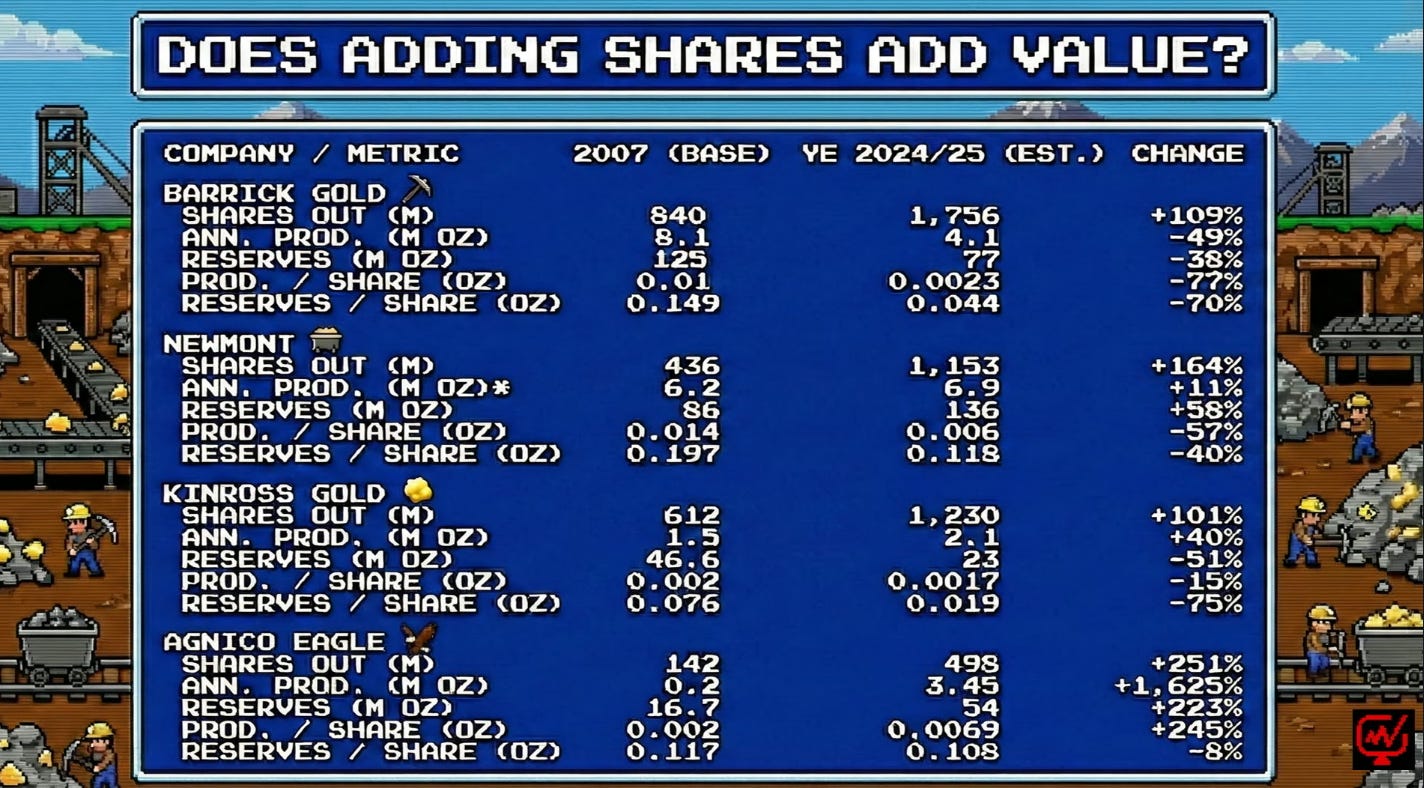
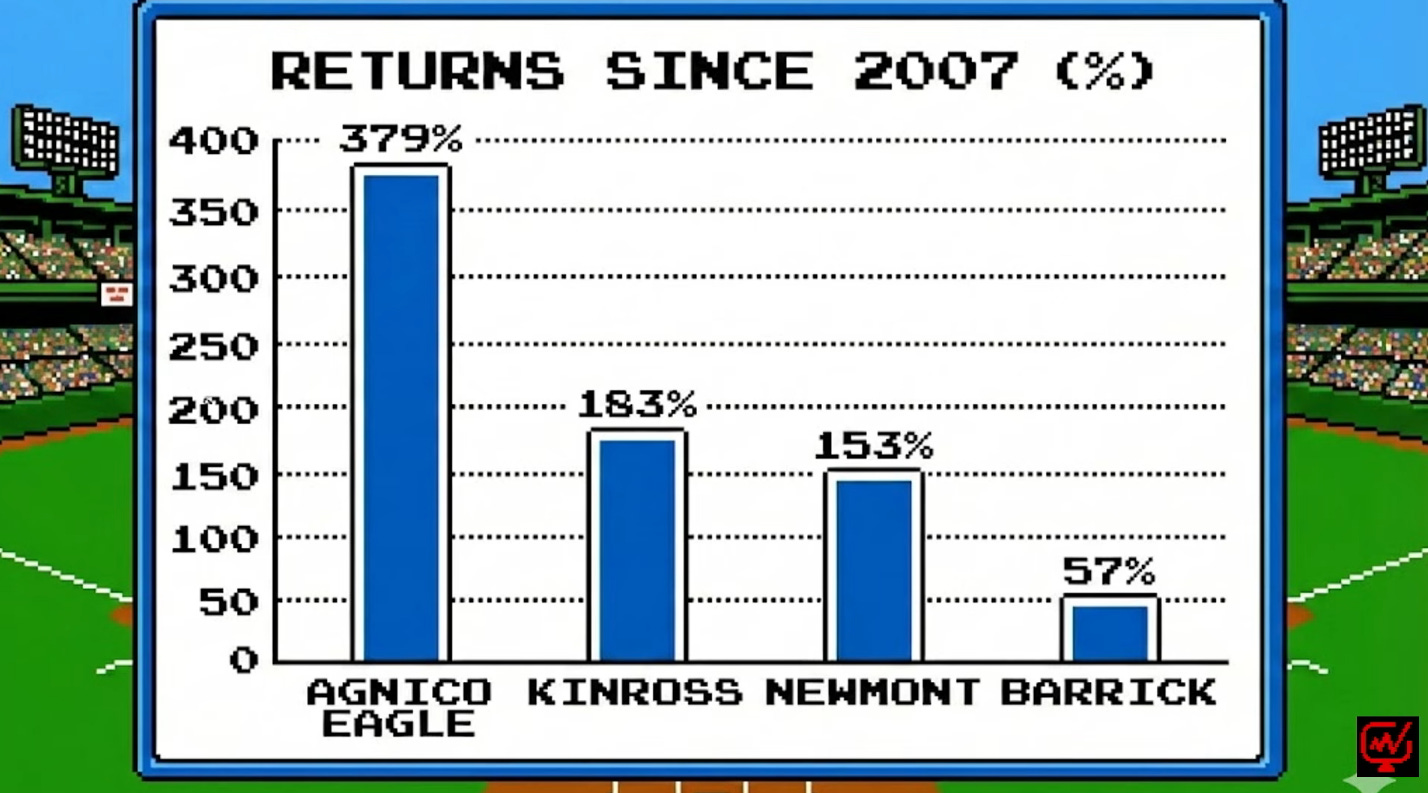
Look at their share count growth relative to their production growth. How much did they dilute you to grow the business? When you look at a company like Agnico Eagle, they stand out because they’ve delivered production with minimal dilution. That’s how you spot a Hall of Famer.
The 2026 Reality Check
We are in a unique window.
Last month, Prime Minister Mark Carney stood at the World Economic Forum and basically admitted the old world order is dead.
And with that, comes the global hunt for counter party riskless assets. It’s here where Gold shines.
For those of us “tinfoil hat-wearing” contrarians who ruin turkey dinners talking about monetary policy—our time has come.
The producers have rerated. The developers are starting to move. But the riskiest, most beat-up cards in the deck are still trailing. Whether that’s a “comeback trade” or a warning sign is up to you to decide by turning over the rocks.
Just watch out for the ravens on your way to the podium.